
Batavia Township Resident Lookup Records
A useful Batavia Township resident lookup does not produce one master answer. The Clermont County Auditor can establish a current parcel and owner relationship. The Recorder can then connect an owner or party to a dated land instrument. Ohio and Clermont voter tools are individual confirmation routes, while the Clerk gateway separates court divisions. For a past identity, Probate, Public Health, and the Clermont County Genealogical Society offer different kinds of leads. A property owner is not automatically a current resident, and a case caption is not a final identity match. Preserve the record type and the date with every result.
| Record | What It Can Confirm | Where | Access |
|---|---|---|---|
| Auditor property roll | Parcel, owner, situs, and assessment context | Clermont Auditor property search | Free web search; it does not list every household member. |
| Recorded instruments | Named parties, legal description, and recording date | Clermont Recorder instructions | Online documents from 1980 to present; older material is at the Recorder. |
| Voter record | Public registration, address, precinct, and date categories | Ohio My Voter Information | Individual lookup, with protected records excluded. |
| Court or Probate docket | Party, case, division, and public case lead | Clermont Clerk gateway | Choose the correct division; the Clerk controls copies and images. |
| Vital or historical index | Event, family, estate, burial, or obituary lead | Clermont County Genealogical Society | Research leads require confirmation with the official custodian. |
Begin with the record closest to the question. An owner question starts at the Auditor. A public registration question starts with the state or county voter route. A case question starts in the court division that handled it. For an estate, marriage, or older vital question, Probate and the historical collection are better starting points than a property card. The Ohio Public Records Act, ORC 149.43, also gives a request route when a defined nonexempt record is not online.
Note: A name match becomes stronger only when address, time period, party role, or a record number agrees across separate official sources.
Verify a Batavia Township Resident
Use a resident lookup as a sequence of checks, not a name-only search. The Auditor owner screen expects LastName FirstName, accepts partial text and an asterisk wildcard, and distinguishes owner, address, parcel, map, and advanced modes. An apparent match should be anchored to the parcel ID, situs address, or legal-description clue before moving to the Recorder. The property card may show a mailing address that differs from the physical situs. That is a tax-correspondence distinction, not proof about who is currently at the address.
- Search the known name or address in the Auditor system and record the parcel ID, Full Address or situs, owner spelling, and search date.
- Open the Recorder search instructions, use the party name with a broad spelling where needed, and compare document date and legal description to the parcel.
- When registration is the relevant second check, use Ohio My Voter Information with first name, last name, and Clermont County. Use Clermont Voter View only when the required date-of-birth confirmation is properly available.
- For a public case lead, select the right court division and compare party role, case number, and date. Ask the Clerk for an official copy or image when the docket alone cannot resolve the question.
- Docket
- A court’s running list of filings, events, and scheduled actions in one case. It is a case lead, not always the full file.
- Index and image
- An index points to a record through names, dates, or document details. An image is the document copy, which may have separate access rules.
- Certified copy
- A copy issued or authenticated by the custodian for an official purpose. It is different from a screen result or informal printout.
The Auditor’s real-estate office reported a 2026 reappraisal process, so property-card facts should be paired with the date searched. A resident lookup should also keep older facts in their own time frame. A recorded mortgage from one year, a current property card, and a historic census entry can all be accurate without describing the same present-day circumstance.
Batavia Township Court Lookup Routes
Clermont’s CourtView gateway sends Common Pleas, Domestic Relations, Municipal, and Probate/Juvenile matters to separate public routes. A no-result in one division is not a countywide no-result. Common Pleas is the route for civil and criminal case leads, including real-estate litigation; Probate holds estate, will, guardianship, marriage, and Probate case material. Domestic Relations and Municipal matters follow their own routes. Select the division before treating a party name as a useful resident lookup result.
The gateway’s documented controls include public access links for each division and a Common Pleas image-request route. Clerk staff need the division, party or case number, and date to assess an image or copy request. Common Pleas records before January 1, 1988 are held at the Clerk’s office rather than its remote system. Probate says remote case access excludes electronic document images, so a visible case entry can require a court inquiry for the underlying public file.
The Common Pleas Dockets and Data page is shown below. It is a starting point for a dated court lead, not proof that every file or every personal detail is publicly available.
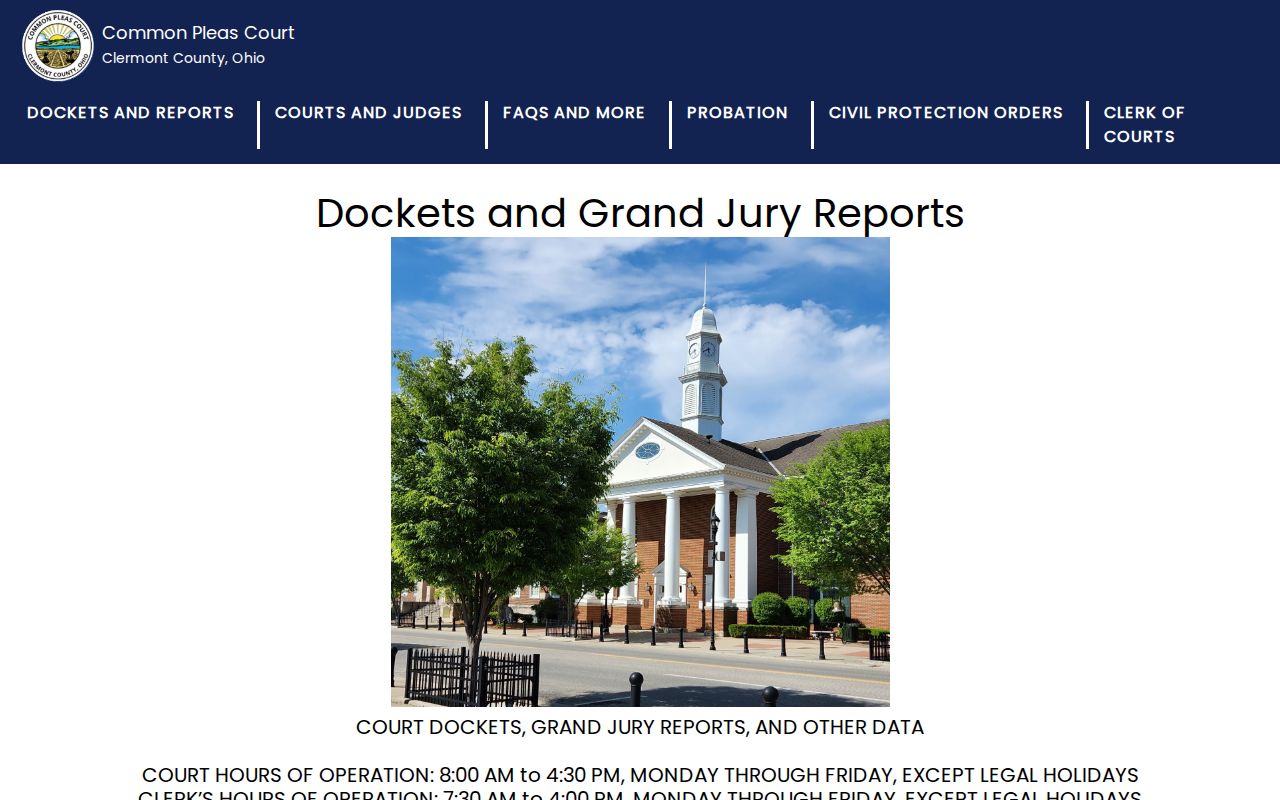
Use the correct court division, then ask the Clerk whether a file is public, archived, sealed, expunged, or otherwise restricted before relying on an image or copy.
The Supreme Court of Ohio Public Docket is a separate appellate resource. Its stated coverage begins January 1, 1985 and it does not replace the Clermont County trial-court search.
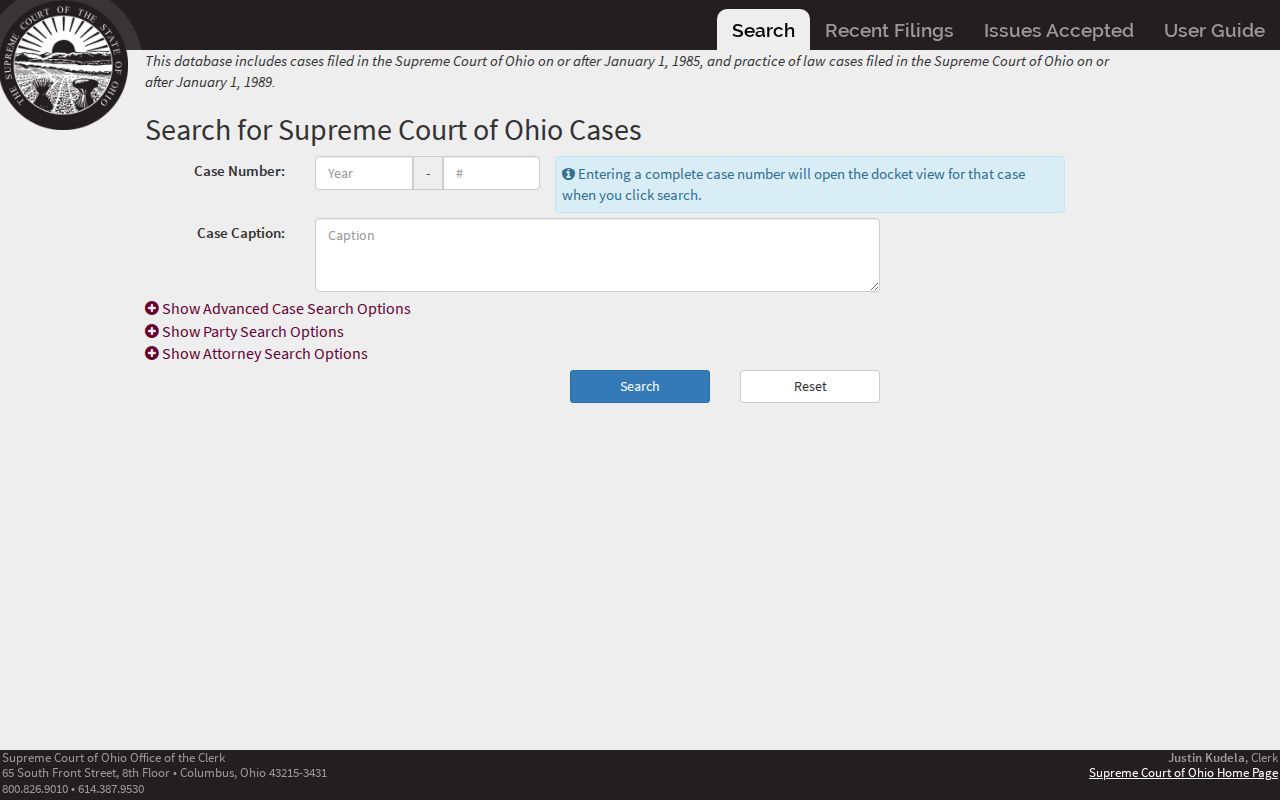
An appellate docket can help locate a Supreme Court case by caption, party, attorney, or case number, but a Clermont court question still belongs with the relevant local clerk.
Note: Remote docket entries are not certified records, so a Clerk-issued copy is the appropriate confirmation when an official record is needed.
Batavia Township Voter and Property Checks
Ohio My Voter Information asks for first name, last name, and county, with a later street selection used to narrow an initial match. Clermont Voter View uses first name, last name, suffix, and date-of-birth controls instead. Those input rules make both tools individual confirmation methods, not open browsing tools for an entire road or block. Ohio law makes several public registration categories available, but excludes Social Security, driver-license or state-ID, phone, email, citizenship proof, protected worker, and Safe at Home information.
For a defined historical civic request, the Clermont Board of Elections is the proper custodian. ORC 3503.26 provides for public inspection of current precinct registration lists when the list is not in official use, subject to statutory protections and election-related limitations. The statewide DATA Act archive offers daily county registration snapshots by selected date, but it is a raw-file system with a limited retention window, not a shortcut for identifying a person. It should be used carefully and only for a lawful, specific purpose.
Property and voter sources work best together when each answers its own question. A parcel can establish an owner relationship and legal geography. A public voter match can establish a registration record that the law permits to be shown. Neither source proves every person connected to an address. For a whole-street parcel workflow, use the Batavia Township street directory instead of repeating an address chain here.
Batavia Township Resident Lookup Vital Leads
For birth and death questions, Clermont County Public Health issues certified Ohio birth and death records filed statewide from 1971 to the present. Its current local fee schedule lists $25 for a certified birth or death copy and $2.50 shipping per order. The application requires a signature and specific event details. In-person processing is typically stated as 15 to 20 minutes, but the right custodian should confirm a particular event and any restriction before a request is made.
For pre-1908 Clermont birth or death research, the county directs researchers to Probate Court. Probate also keeps marriage records. Its marriage-record instructions state that public marriage records run from 1800 to the present and that a certified copy costs $3, cash or money order only; a mail request needs the names as issued, marriage date, payment, and a self-addressed stamped envelope. Divorce questions belong with Domestic Relations, not Public Health or the Recorder.
Vital access is record-specific. ORC 3705.23 uses a signed application and fee for ordinary certified copies, while certain medical information and other statutory categories have separate limits. A death certificate’s Social Security number has special restrictions during the first five years after death. The current Clermont birth and death application is the right form to review before an order.
Batavia Township Credential Record Checks
Official credential and filing systems can provide narrow affiliation evidence during a resident lookup. eLicense Ohio verification has Individual and Business modes and supports first name, last name, license number, and board fields for participating boards. Its exposed detail can include status, board, credential type or number, effective and expiration dates, and a recorded location. The state says the system updates daily, but also warns users not to rely on a web result to their detriment. Confirm a material status question with the responsible board.
The Ohio eLicense screen below represents a state credential route, not a general address directory.
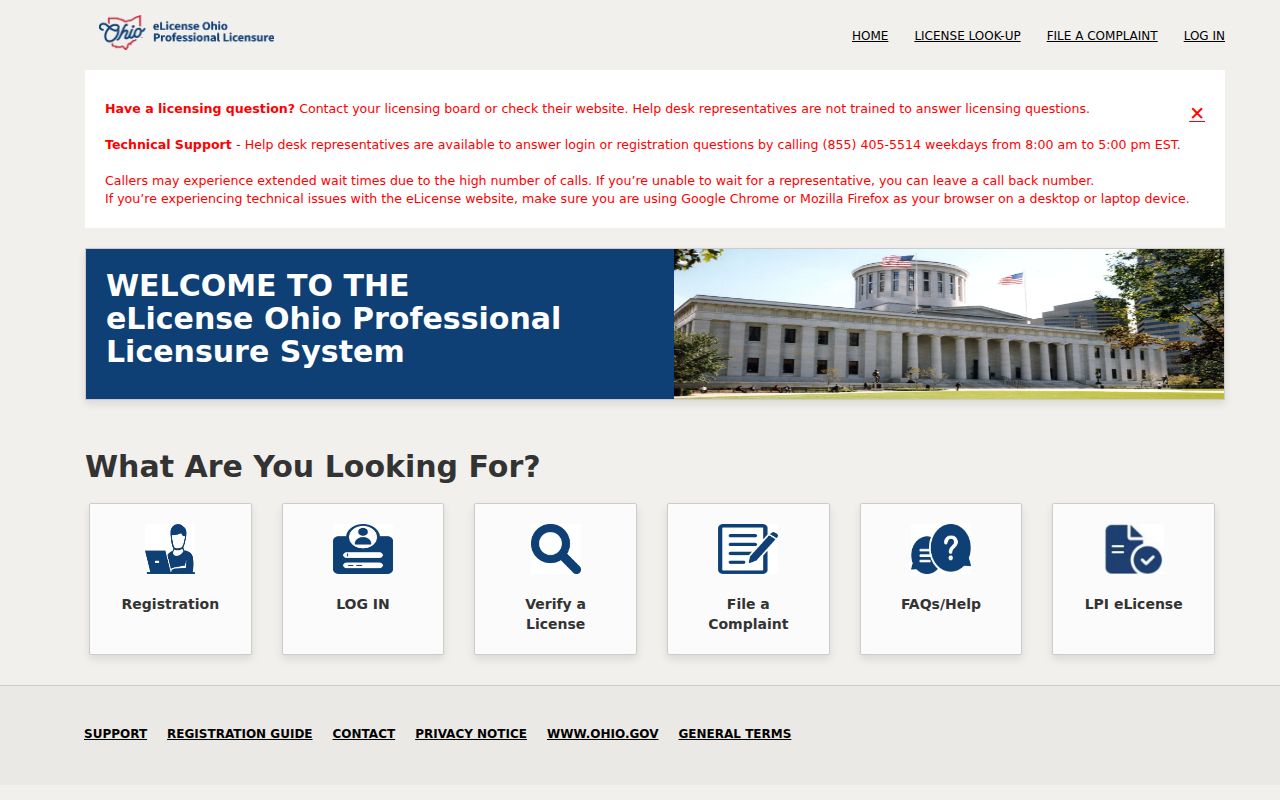
A matching credential should be compared with the board, credential number, and effective dates rather than assumed to identify a current local address.
The Ohio Secretary of State’s Business Search is likewise limited. It can identify a statutory agent, filing status, and filing history, but the state does not maintain a universal owner or officer list. A statutory agent receives legal documents and is not automatically the entity owner, manager, or a residence connection. The UCC search has different debtor and secured-party roles and should be read in that filing context.
For a separate state-custody status question, the Ohio Department of Rehabilitation and Correction Offender Search is distinct from a Clermont County resident record.
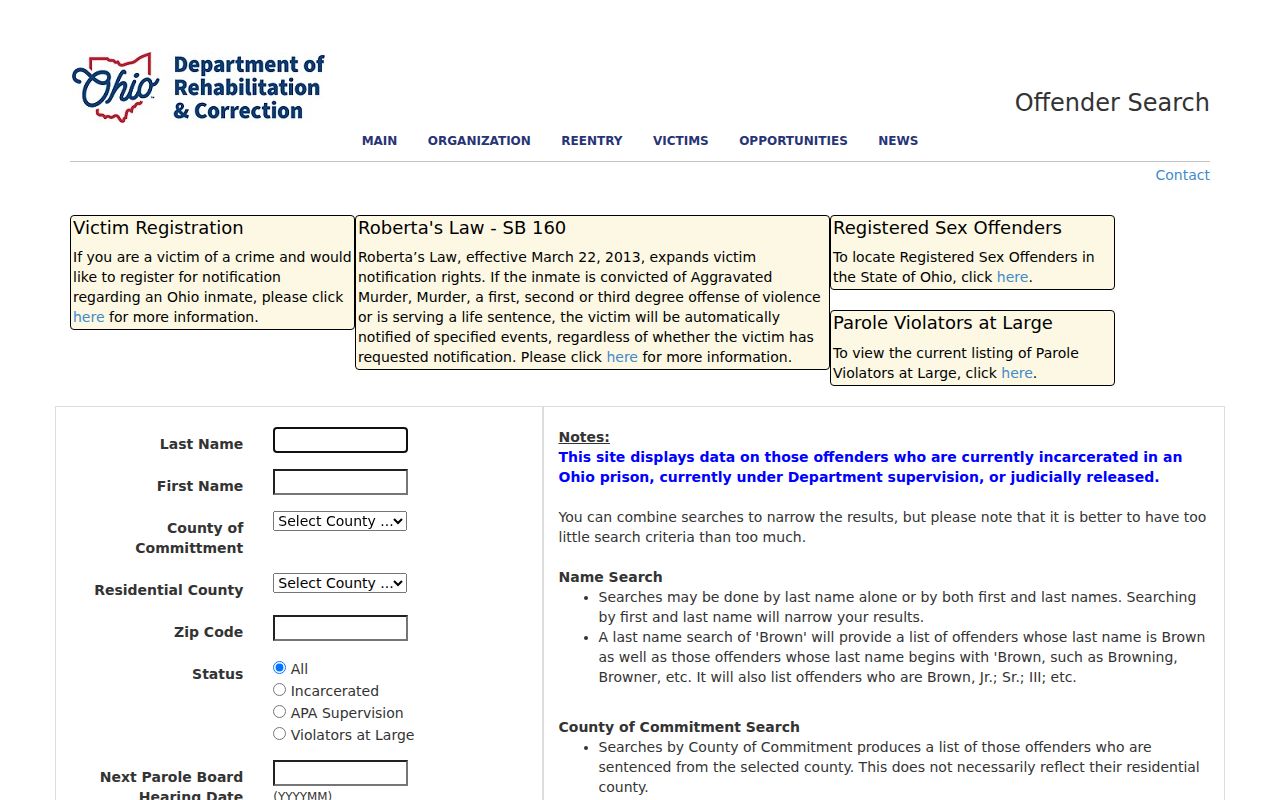
A state custody result must be confirmed through its own agency and does not establish a person’s present Batavia Township address.
Batavia Township Resident Lookup Historical Indexes
When an online result stops short, return to the office that owns the record. The Recorder offers online search, in-person copies, and written mail requests; documents from before 1980 are not a reason to assume the archive begins in 1980. Its counter is at 101 E. Main Street in Batavia, and the office can use a public-records form to clarify a request, although the form is not mandatory. Specify the name variant, date range, document type, legal description, or parcel clue that narrows the search.
For historical identity work, the Doris Wood Batavia Branch and CCGS collection offer surname notebooks, family files, obituary cards, maps, census resources, and Clermont County newspaper microfilm from 1814 forward. CCGS reports more than 30,000 obituary records and 45,440 burials from 201 county cemeteries. Those are strong leads for genealogy and estate work, but the source record or issuing custodian remains the place to confirm an official fact.
Ohio’s Public Records Act lets any person request a defined public record, with free inspection and copy charges generally limited to actual cost. A custodian may need to redact protected information or explain why a record cannot be released. A concise request that identifies a record category and time range is more likely to reach the right search path than a request for every record tied to a name.
Batavia Township Resident Lookup Limits
Public access has real boundaries. Ohio Safe at Home protects qualifying participants through a Secretary of State substitute-address program, and confidential participant information is exempt from public records. Voter records exclude Safe at Home participants and other protected data. ORC 149.45 offers an internet-redaction path for defined personal information in an online public record, but it is not a universal deletion right. The Recorder states that it cannot alter or delete a recorded instrument unless a law authorizes that action.
If an official fact is wrong, contact the custodian that maintains it: the Auditor for a property-card question, the Recorder for document process, the Board of Elections for registration, the Clerk for a docket or file, and the issuing office for a vital record. An adoption-related question has its own constrained ORC 3107.47 process and is not an ordinary name search. Separate procedures protect both the records and the people named in them.
Lawful use. Use public records for a lawful, specific personal or family-history question. Do not use a Batavia Township resident lookup to stalk, harass, intimidate, or harm another person.
Note: A custodian can explain a record’s fields and access route, but cannot resolve identity from vague personal details or release protected material.